We are pleased to share an update on our recent Smart-Free Childhood Information Event held on Wednesday 20th November. The event was a great success, and we were thrilled to see lots of you in attendance. We know that some of you were unable to make it and wanted a summary of the session.
It’s important to note that this is not a scare story about being worried about new things – there is a wealth of research and data over the last 15 years or so, of the harmful effect of social media use, including messaging apps, on young people’s mental health and social issues. We feel that at this important time, and with this wealth of information, it is important to help our families understand the risks of smartphone use for children so that parents and carers can be better informed. We are not advocating banning phones, but would instead recommend delaying their use. Many families have already decided to give their children smartphones – we are not criticising them, nor are we advocating their removal.
The second important thing to note is that this is an entirely joint movement between school and parents. Only through collaboration are we able to change social norms for the benefit of our children.
Thank You to Our Speakers
Firstly, we would like to extend our heartfelt thanks to our wonderful speakers. Coleham parent Mrs Renshaw opened the conversation by sharing that she plans to delay smartphones for her children after being worried by the latest research and statistics. The information in the slides below had prompted her to think about what has become the cultural norm for our children and to better understand the problem.
We asked the questions:
- What age is the right age for a child to have a smartphone?
- Why is age 10-11 currently accepted as the age that children receive smartphones?
- Could it become even lower in the future?
The slides below make for very interesting reading, with statistics and data that you may find shocking:
Smartphone Free Data Slides
Thank you to Assistant Headteacher, Mr Tudor, from The Priory School who talked about the current e-safety challenges secondary schools are facing which can significantly affect the young people. A recent example is using Artificial Intelligence to create fake images, videos or audio files – commonly known as “deepfakes” and circulating them to spread misinformation. This has recently been of an adult nature and would clearly cause significant emotional distress and damage to reputations, often leading to serious mental health issues.
I shared the viewpoint from Coleham School’s Leadership Team that we are not advocating any right age or right way to manage e-safety in homes. Parents and carers are more than capable of supporting their children through complex issues, but we hope that this collaboration highlights issues that you may not have considered, and opens up discussions about e-safety so we can all learn from each other. It will also reassure families who may feel they are in the minority if they decide to make alternative choices. There are many wonderful benefits of technology which we see in schools and we want to equip our children for living in a connected, digital world whilst safeguarding against very real risks. We owe it to our children to ensure that they grow up in a safe environment, both in the real world and the online world.
At Coleham, we often have a wide-range of issues around smartphones and social media use immediately after Christmas when many children receive their first phones. Issues we see include: large group chats with too many notifications, threats of violence in messages, unkind comments (sometimes racial or sexual in nature) and online bullying. We have also seen instances of pornographic material being shared. Sometimes, these are communciations with children not in our school, including much older siblings and can expose children as young as 8 or 9 to very dangerous situations. All of these communications happen outside of school and can therefore be very difficult to manage for both families and school.
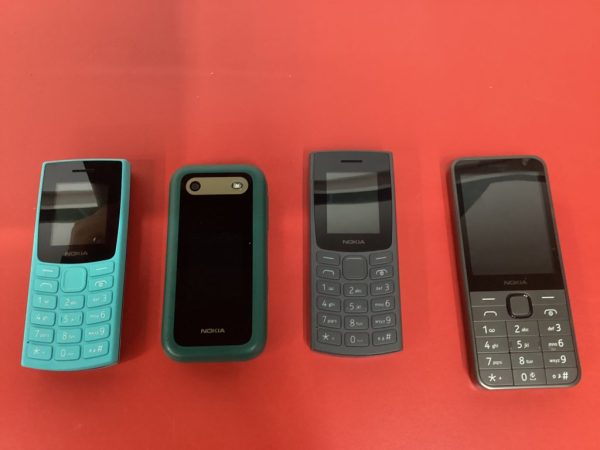
It was also enlightening to hear personal experiences from speakers Tom and Tess, Shrewsbury parents who are part of Smartphone-Free Childhood Shropshire group. They decided to delay giving smartphones for their children and used an alternative option. Instead they bought their children a basic Nokia feature phone, which can only call and text, and does not have access to apps or the internet. This drastically reduces the risks associated with excessive screen time and online dangers. They talked about the benefits they have found, such as:
- Removing the parental stress of policing and checking a phone
- Removing the burden for their children of having an expensive phone to look after
- Avoids being subjected to group chats & notifications etc from peers. We have seen children in enormous group chats that extend beyond our school community, often with abhorrent, violent, racist and sexist language, and pornographic content.
- Encouraging healthier habits, such as outdoor activities, pursing hobbies and being more present & communicative.
See examples of Feature Phones below:
Who are the Smartphone Free Childhood Shropshire
The Smartphone Free Childhood Movement is a community of parents locally and nationally who want others to know that they are not alone if they decide to delay a smartphone, and that by getting together as a community, they could make a change and reset the social norm.
Parents can sign an online declaration, committing to delaying smartphones HERE
It is interesting to see the growing numbers of parents in Shropshire who are signing the pact, and which schools their children attend. See the pact numbers for Shropshire HERE
Benefits of a Smartphone-Free Childhood
During the event, we discussed several benefits of reducing smartphone use among children, such as:
- Improved Focus and Attention: Children are better able to concentrate on tasks and engage in deep learning without the distraction and developed habits from smartphones.
- Enhanced Social Skills: Face-to-face interactions help children develop essential social skills and build stronger relationships.
- Increased Physical Activity: Without the lure of screens, children are more likely to engage in physical play, which is crucial for their overall health.
- Better Sleep: Reducing screen time, especially before bed, can lead to improved sleep quality.
Thank you to the parents who attended for contributing to the open discussion at the end and sharing your experiences, views and tips. We appreciate your continued support and involvement in school to promote a healthy, balanced lifestyle for our children.
This is not just a Coleham problem, or a Shropshire problem, or even a UK problem. Across the world, governments are grappling with how to manage social media companies. In Australia, they are working towards banning social media use for children under 16. Below are a few news stories linked to the issue:
Should you have any further ideas or suggestions with regard to e-safety, or other collaborations / support you would like to see from us, then please do get in touch.
Kind regards,
Tom Larkham
Headteacher